

Polyester vs Cotton: A 2026 Guide to Conscious Fashion Choices
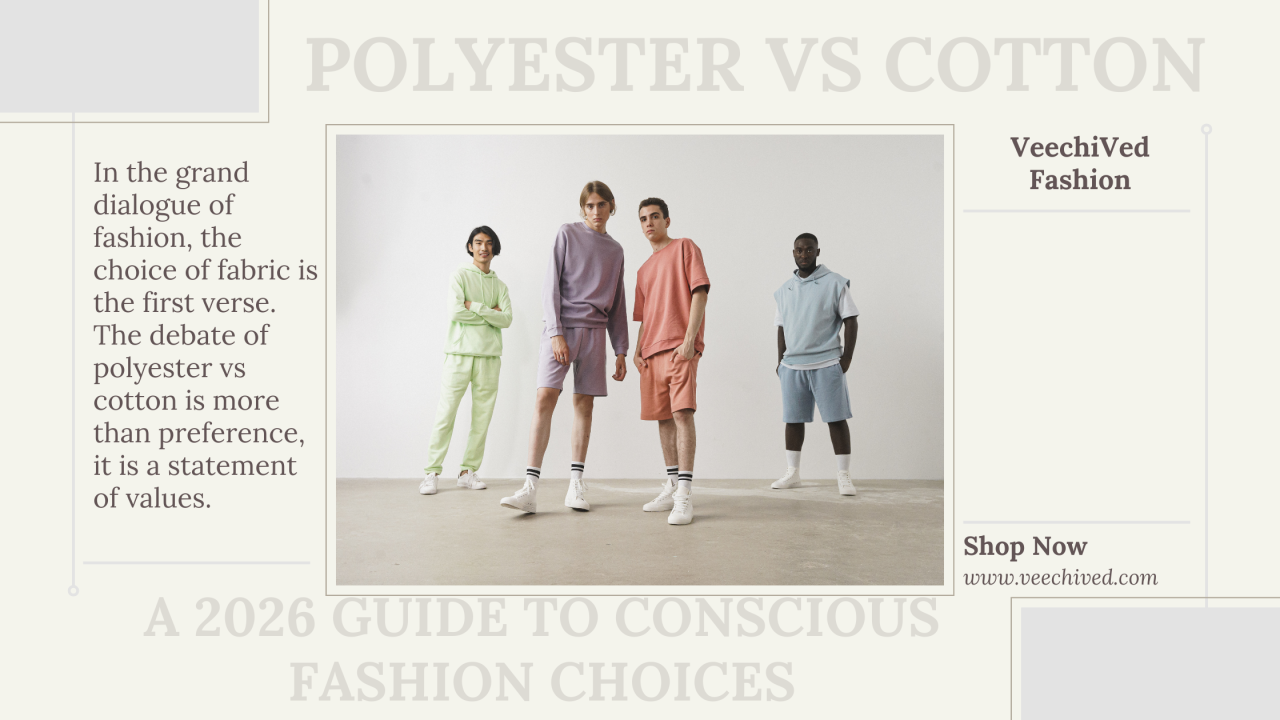
In the grand dialogue of fashion, the choice of fabric is the first verse. The debate of polyester vs cotton is more than preference, it is a statement of values. As we navigate conscious fashion 2026, understanding our textiles is understanding ourselves. This guide explores the threads that connect our clothing to our well-being and the world, a core principle at Veechi Ved where every garment is a conscious choice.
Understanding the Basics: Natural Fibers vs Synthetic Materials
The fundamental difference in the polyester vs cotton discussion lies in their origin. One is born from the earth, the other from a laboratory. This distinction, or bheda (भेद), influences everything from how the fabric feels on your skin to its ultimate fate in the environment. It is the core of the natural fibers vs synthetic debate: transient utility versus enduring value.
What is Polyester? The Science Behind the Plastic
Polyester is a synthetic polymer, a petroleum-based plastic fiber. Its creation in the 20th century revolutionized fashion, offering a cheap, durable alternative. The process, polymerization, creates long-chain polymers that are melted and spun into yarn. This efficiency made it a cornerstone of fast fashion, but at what cost to our connection with the natural world?
The Origins of Cotton: A Legacy of Natural Comfort
Cotton, or karpasa (कार्पास) or कपास in Samskrit, is a natural cellulose fiber from the boll of its plant. Its history is woven into the very fabric of Bharat (India), a legacy of comfort and trade spanning millennia. At Veechi Ved, our commitment to this legacy is absolute. We partner with Indian farmers, highlighting the social and economic Indian cotton benefits and ensuring that the fabric touching your skin is as pure as the wisdom it carries.
Breathability and Skin Health: Why the Polyester vs Cotton Choice Matters
How a fabric interacts with your skin, or tvak (त्वक्), is paramount. This is where the practical, everyday differences in the polyester vs cotton comparison become most apparent.
Moisture Wicking vs. Absorption: Managing Sweat
-
Polyester: Being hydrophobic, it repels water. It wicks sweat away from the skin, which is why it is often used in athletic wear. However, its plastic nature can trap heat and odor-causing bacteria.
-
Cotton: Being hydrophilic, it absorbs moisture and draws it into its fibers. The natural structure allows air to circulate freely, making it a superior sensitive skin fabric. Its hypoallergenic properties offer ease and comfort.
Is 100% Polyester Cooler Than Cotton in Summer?
This is a frequent question, and the answer is generally no. While polyester moves sweat, it doesn't breathe, trapping a layer of warm, humid air against your body. The superior breathability of cotton allows for better airflow, aiding your body's natural cooling process. Veechi Ved garments are crafted for comfort in varied climates, acknowledging that our pure cotton t shirts are a year-round staple, not just for a specific season.
Durability and Maintenance: Longevity of Your Wardrobe
Here, the practical differences in polyester vs cotton are clear. Polyester excels in resisting wrinkles and shrinkage due to its synthetic, stable structure. Cotton, being a natural fiber, is more prone to both. Yet, is convenience the ultimate pramaana (प्रमाण), or measure of value? We believe the trade-off for polyester's convenience is a loss of comfort and connection. At VeechiVed, our premium Indian cotton undergoes processing that minimizes shrinkage, and we find that a well-cared-for cotton garment possesses a grace that plastic can never replicate. The overall fabric durability depends on the quality of the weave and care.
Environmental Impact: The Sustainability of Cotton vs. The Environmental Impact of Polyester
The most critical aspect of the polyester vs cotton discussion in 2026 is environmental. The choice we make has consequences that ripple outward, affecting our shared bhumi (भूमि), or Earth.
Key Differences at a Glance
|
Feature |
Polyester |
Cotton |
|
Origin |
Petroleum (Fossil Fuels) |
Plant-Based (Natural) |
|
Breathability |
Low, traps heat |
High, allows airflow |
|
Moisture Handling |
Wicks (repels) moisture |
Absorbs moisture |
|
Skin Feel |
Can feel slick or clammy |
Soft, natural, ideal sensitive skin fabric |
|
End-of-Life |
Non-Biodegradable (persists for 200+ years) |
Biodegradable (decomposes in months) |
|
Key Consideration |
Releases microplastics when washed |
Superior breathability of cotton |
The Hidden Cost of Microplastics in Synthetic Fabrics
The critical environmental impact of polyester is its plastic nature. Here is what that means:
-
Microplastic Pollution: Every wash of a polyester garment sheds thousands of microplastic fibers.
-
Water Contamination: These plastics enter our waterways, food chain, and even our bodies.
-
Longevity in Landfills: As a non-biodegradable material, it will remain in landfills for centuries, a permanent mark of transient fashion.
Supporting Indian Farmers and Biodegradable Practices
VeechiVed's philosophy is a conscious departure from the fleeting latest fashion trends for men's clothing and harmful materials. By minimizing polyester, we stand for a different set of values. This is a core part of our mission for conscious fashion 2026.
The Veechi Ved Vision: Reclaiming Legacy Through Material
The name VeechiVed signifies a 'new wave of knowledge.' For us, the fabric is not merely a backdrop; it is a medium for timeless wisdom. The polyester vs cotton choice is therefore simple. Only a natural, breathable fiber like cotton, used in our sanskrit printed t shirts, can truly serve as a worthy canvas for profound concepts like those explored in 'The Existence' or 'The Karma Continuum Tee'.
Value Beyond the Price Tag
|
Metric |
Fast Fashion (Polyester-Dominant) |
Veechi Ved (Premium Cotton) |
|
Initial Cost |
Low |
Accessible Premium |
|
Cost Per Wear |
High (due to low lifespan) |
Low (due to high lifespan) |
|
Fabric Durability |
Prone to pilling and odor retention |
Softens with age, high quality weave |
|
Value |
Monetary, disposable |
Comfort, intellectual, cultural, and enduring |
The Essence of Veechi Ved: Purity in Design and Fabric
Consider 'The Essence of VeechiVed' collection. The embroidered Samskrit letters (वी, चि, वे, दः) symbolize harmony and rhythm. This purity of message demands a purity of material. The exceptional breathability of cotton mirrors the clarity we seek in life. The choice of the finest natural fibers is a testament to our core principles.
Re-imagined Sizing for Comfort and Body Positivity
Our unique sizing system (1, 2, 3, 4, 5) is a stand against judgment. Natural fabrics like cotton complement this ethos. Cotton drapes and adapts to diverse body shapes far better than rigid synthetics. It promotes physical and emotional comfort, making it the perfect choice.
Cost Analysis: Fast Fashion vs. Accessible Premium Apparel
Polyester is cheap. That is its primary allure. But what is the true cost? In the debate of natural fibers vs synthetic, we must look beyond the price tag. A VeechiVed piece like 'The Pramaan' (representing evidence and truth) is an investment. It’s an investment in superior comfort, greater fabric durability over time, and intellectual pride. We position ourselves as accessible premium apparel, where the value is woven into the material, the message, and the positive impact.
Final Verdict: Making the Right Choice for You and the Planet
So, in the contest of polyester vs cotton, who wins? The answer depends on your dharma (धर्म), your purpose. If you seek fleeting trends and low initial cost, polyester serves a purpose. But if you seek connection, comfort, and a clear conscience, the choice is cotton. We believe the path forward for fashion is one of intention. It involves understanding the true cost of synthetic materials and celebrating the profound Indian cotton benefits.
Choosing a VeechiVed garment is more than a purchase, it is an affirmation of a life lived with awareness. The debate of polyester vs cotton is a reflection of the larger choice between the synthetic and the authentic. When considering polyester vs cotton, you are choosing your connection to the world. Which path will you walk?
Frequently Asked Questions
Q1. Which is better cotton or polyester?
Cotton is generally better for breathability and skin health, while polyester is more durable and wrinkle-resistant.
Q2. What are the disadvantages of polyester?
It is not breathable, can trap odors, is made from petroleum, and releases microplastics when washed.
Q3. Is 100% polyester cooler than cotton?
No, cotton is typically cooler because its natural fibers allow for much better airflow than synthetic polyester.
Q4. Why does VeechiVed minimize polyester use in their collections?
We choose natural fibers like cotton to align with our brand ethos of purity, comfort, and environmental consciousness.
Q5. Does cotton shrink more than polyester?
Yes, cotton is more prone to shrinking than polyester, and all natural fibres have this tendency, but high-quality processing can minimize this.
Q6. Is VeechiVed's cotton apparel a conscious choice?
Yes, we focus on using natural, biodegradable fibers and supporting local farmers, which are key elements of making a conscious fashion choice.