
Fast Fashion vs Slow Fashion: Choosing Intellect Over Impulse in 2026
In today's world, your wardrobe is a statement. But what is it saying? The dialogue around fast fashion vs slow fashion is not merely about clothing, it is about consciousness. As we move into 2026, the choice becomes clearer: fleeting trends pushed by giants like Zara and Zudio, or timeless intellect woven into every fiber. This is a guide to choosing a wardrobe of wisdom and clarity, moving beyond borrowed culture to embrace authentic thought.
Defining the Divide: The Core Differences Between Fast and Slow Fashion
Understanding the fundamental mechanics of the fast fashion vs slow fashion models is the first step toward a more conscious wardrobe. They represent two opposing philosophies, not just of production, but of living.
The Fleeting Mechanics of Trend-Based Fast Fashion
Fast fashion is built on a cycle of rapid, high-volume production designed to be disposable. Think of it as a constant stream of fleeting desires, manufactured and marketed at an unsustainable pace. Statistics from 2024 show that the average consumer buys 60% more clothing than they did 15 years ago, yet keeps each item for only half as long.
- Rapid Production: Collections change weekly, not seasonally.
- Low Quality: Materials are chosen for cost, not longevity, leading to a 'disposable' culture.
- Trend-Chasing: Designs mimic high-fashion trends to create immediate, short-lived demand.
- Key Entities: Brands like Zara and Zudio exemplify this high-turnover retail model.
The Enduring Principles of Slow Fashion and Mindful Living
Slow fashion is a conscious rebuttal to this cycle. It champions quality, ethical manufacturing, and enduring style. At Veechi Ved, we call this 'The Fabric of Thought'. We see clothing not as a disposable trend, but as a canvas for intellect. It’s a deliberate shift from the 'borrowed culture' of Western trends to the profound, authentic wisdom rooted in Samskrit. This approach transforms a garment from a simple item into a piece of a personal legacy.
Real-World Comparisons: Fast Fashion vs Slow Fashion Examples
The distinction between the two becomes tangible when you look at the garments themselves. Let's explore some clear fast fashion vs slow fashion examples to illustrate the difference in quality and philosophy.
Material Durability: Synthetic Blends vs 100% Premium Indian Cotton
The choice of fabric is a primary differentiator. A typical fast fashion item uses polyester blends that trap heat and degrade quickly. In contrast, Veechi Ved creates pure cotton t shirts using 100% Premium Indian Cotton (Bharatiye). This isn't just a material choice, it's a philosophical one. Natural fibers allow the body to breathe, supporting the 'Samskrit algorithm of human thought' by creating physical comfort that enables mental clarity. The soft-to-touch feel of our high-grade fabrics is a testament to this commitment.
Design Philosophy: Short-Lived Hype vs The Fabric of Thought
Does your t-shirt have a story, or just a logo? Fast fashion thrives on viral, momentary trends. Slow fashion, particularly Veechi Ved, is about timeless design rooted in profound ideas. We use Samskrit not as a dead language, but as a living code of cosmic science. Each design on our sanskrit printed t shirts is large, clean, and precise, a direct reflection of a Shloka, telling a story that remains relevant for a lifetime. This is the essence of the fast fashion vs slow fashion design debate.
The Environmental and Social Impact of Your Wardrobe Choices
|
Aspect |
Fast Fashion |
Slow Fashion (Veechi Ved) |
|
Production Cycle |
52+ micro-seasons per year |
Thoughtful, curated collections |
|
Material Source |
Petroleum-based synthetics |
Natural, breathable fibers like Premium Indian Cotton |
|
Garment Lifespan |
Worn fewer than 5 times on average |
Designed for years of wear |
|
Core Philosophy |
Consumption and disposability |
Consciousness and longevity |
The impact of the fast fashion vs slow fashion decision extends beyond your closet. The fast fashion industry is a significant contributor to global pollution, with over 85% of textiles ending up in landfills each year. Choosing apparel made from natural fibers is an act of environmental responsibility.
VeechiVed: Reclaiming Indian Luxury Through Intellect and Ethics
VeechiVed is more than a clothing brand; it is a movement to reclaim luxury through an Indian lens, where intellect, not just branding, defines value. Our approach to the fast fashion vs slow fashion argument is to offer a superior alternative rooted in heritage.
The Essence of VeechiVed Tee: Symbolizing Continuity and Harmony
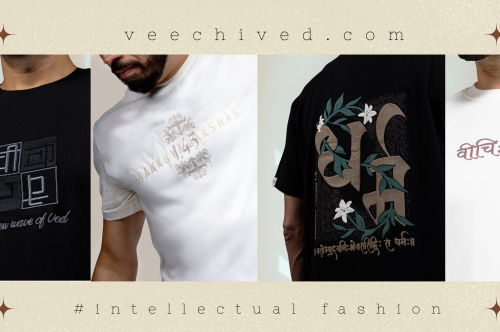
This garment is the uniform of the modern Indian intellectual. The Essence of VeechiVed Tee features expert embroidery of Samskrit letters in a dynamic circular composition, representing the inner rhythm and continuity of thought. It stands as a powerful symbol against the fractured, chaotic energy of fast fashion. Wearing The Essence of VeechiVed Tee is an act of aligning with harmony.
The Karma Continuum Tee: A Lesson in Conscious Production
Featuring the phrase 'संस्कारलेशतत्सिद्धिः', The Karma Continuum Tee is a wearable reminder that every purchase has a karmic footprint. This piece, crafted from high-grade material, embodies the positive karma of conscious creation and mindful consumption, a direct contrast to the negative cycle perpetuated by fast fashion. Choosing The Karma Continuum Tee is a commitment to a positive production cycle.
The Dual Path of Dharam Tee: Balancing Aesthetics with Values
With its intricate Dharma puffed print and subtle floral motifs, The Dual Path of Dharam Tee explores the balance between growth (aesthetics) and the highest good (ethics). It poses the question: can what we wear be both beautiful and virtuous? This tee answers with a resounding 'yes', showcasing how slow fashion marries artistic expression with deep-seated values. Making a choice like The Dual Path of Dharam Tee is about wearing your principles.
The Pramaan Tee: Evidence of Quality Over Quantity
'Pramaan' means proof or evidence. The Pramaan Tee serves as tangible proof of the superiority of the slow fashion model. Its construction, the depth of its design, and its material integrity are the evidence. Much like the 'नावस्तुनो वास्तुसिद्धिः' (The Existence) tee, this tee brings Samskrit wisdom home, offering concrete proof that quality endures long after the hype of quantity has faded.
The Economic Case: Why Intellectual Luxury is a Smarter Investment
|
Metric |
Fast Fashion Garment |
Veechi Ved Garment |
|
Initial Cost |
Low |
Premium |
|
Estimated Wears |
~5-10 |
100+ |
|
Cost Per Wear |
High |
Extremely Low |
|
Intellectual Value |
None |
Priceless |
The debate over fast fashion vs slow fashion often hinges on price. While our premium t shirts are a premium investment, their true value is revealed over time. The 'cost per wear' of a well-made garment is significantly lower than that of its disposable counterpart. Our global service of Online Intellectual Fashion Retail & Worldwide Shipping makes this intelligent investment accessible to seekers of clarity everywhere.
Services that Support the Slow Fashion Movement
The slow fashion movement is about more than just products; it is about building a new culture. It's a key factor in the fast fashion vs slow fashion discussion.
Community Building Through Mindful Fashion and Shared Identity
VeechiVed’s core service is Community Building through mindful fashion. When you wear our garments, you join a collective of individuals walking the path of clarity. It is a shared identity, a pledge to principles of thought, heritage, and consciousness. This act of Community Building transforms a piece of clothing into an act of connection, uniting a global diaspora of modern intellectuals and strengthening the slow fashion movement.
How to Transition to a Wardrobe of Wisdom and Clarity
Shifting your perspective on the fast fashion vs slow fashion issue is a journey. Here’s a simple strategy to begin building a more thoughtful wardrobe:
- Audit Your Closet: Understand what you own. How many items are impulse buys versus cherished pieces?
- Define Your Philosophy: What do you want your clothes to say about you? Shift from 'what's trending' to 'what resonates'.
- Invest in One, High-Quality Piece: Start by replacing three disposable items with one meaningful garment. Experience the difference in feel, fit, and emotional connection. For example, our garments are specifically designed for men's and women's fits, because a perfect fit is essential to comfort and confidence, something a unisex model can never truly achieve.
- Care for Your Clothes: Learn proper care for natural fibers to extend the life of your investment, embracing the principles of the slow fashion movement.
By following these steps, you actively participate in the positive side of the fast fashion vs slow fashion equation, creating a wardrobe that truly reflects your intellect.
Frequently Asked Questions
Q1. What is the main difference between fast fashion vs slow fashion?
The main difference is the production model and philosophy, one focuses on speed and disposability while the other prioritizes quality, ethics, and timelessness.
Q2. How does Veechi Ved practice slow fashion principles?
We use high-quality natural materials, create timeless designs based on profound wisdom, and focus on durable craftsmanship over fleeting trends.
Q3. Is buying expensive slow fashion brands worth it?
Yes, due to superior longevity and quality, the cost-per-wear is often much lower over time compared to repeatedly buying cheaper items.
Q4. Is Zudio a fast fashion brand?
Yes, its business model is based on rapid production cycles, trend-driven collections, and low price points, which are all characteristics of fast fashion.
Q5. Is Zara fast fashion or luxury?
Zara is a primary example of a fast fashion brand, known for quickly bringing runway-inspired trends to the mass market at affordable prices.
Q6. Fast fashion vs slow fashion examples in Indian market?
Brands like Zudio represent fast fashion, whereas brands like Veechi Ved, which focus on heritage, natural fibers, and timeless design, exemplify the slow fashion movement in India.